Introduction
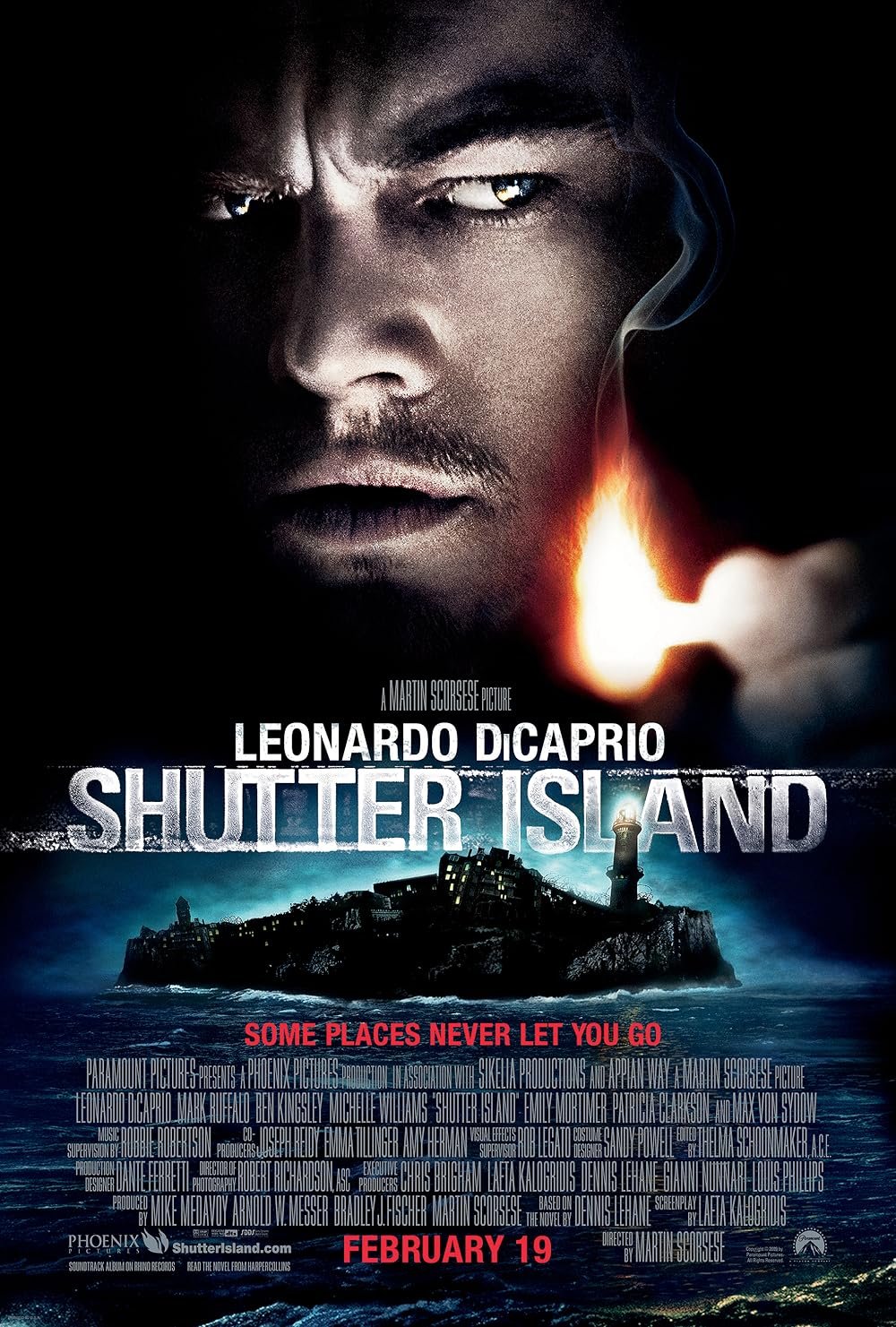
Martin Scorsese’s Shutter Island is one of the most fascinating psychological thrillers of the modern era.
The film follows U.S. Marshal Teddy Daniels as he travels to Ashecliffe Hospital, a psychiatric institution located on a remote island, to investigate the disappearance of a patient.
However, the story slowly reveals that nothing on the island is what it first appears to be.
The movie’s ending completely redefines the entire narrative and forces the audience to reconsider everything that happened before.
Understanding the ending requires examining the film’s clues, the psychology of the main character, and the deeper themes about guilt, trauma, and denial.
Teddy Daniels’ Investigation
At the beginning of the movie, Teddy Daniels arrives on Shutter Island with his partner Chuck Aule.
Their mission seems straightforward: find out how a dangerous patient managed to disappear from a locked room inside Ashecliffe Hospital.
As Teddy interviews staff members and patients, he begins to suspect that the hospital may be hiding something.
The environment becomes increasingly unsettling.
Patients behave strangely.
Doctors avoid answering certain questions.
And Teddy starts experiencing disturbing dreams about his past.
These clues slowly build toward the film’s shocking twist.
The Truth About Teddy Daniels
Near the end of the movie, the doctors finally reveal the truth.
Teddy Daniels is not a U.S. Marshal.
His real name is Andrew Laeddis, and he is actually one of the patients at Ashecliffe Hospital.
The investigation that Teddy believed he was conducting was actually an elaborate therapeutic experiment designed by the doctors to help him confront reality.
Andrew created the identity of Teddy Daniels as a psychological defense mechanism.
He could not cope with the trauma of what had happened to his family.
The Tragic Backstory
The true story is revealed in one of the most disturbing scenes of the film.
Andrew’s wife Dolores suffered from severe mental illness and eventually drowned their three children.
When Andrew discovered what had happened, he shot and killed her.
Unable to accept this reality, Andrew’s mind created an alternate identity where he was a heroic U.S. Marshal instead of a grieving father responsible for tragedy.
This psychological denial allowed him to escape the unbearable guilt.
The Hospital’s Experiment
Dr. Cawley explains that the hospital created an experimental treatment.
Instead of forcing Andrew to face reality directly, they allowed him to play out his fantasy as Teddy Daniels.
The hope was that eventually Andrew would realize the truth on his own.
If the experiment failed, the doctors would have no choice but to perform a lobotomy.
This makes the final scenes even more tragic.
Andrew finally understands the truth.
But the question remains: does he accept it?
The Meaning Of The Final Scene
The final scene is one of the most debated moments in modern cinema.
Andrew appears calm and lucid as he speaks to Dr. Sheehan.
Then he says the line:
“Which would be worse: to live as a monster or to die as a good man?”
This moment suggests something extremely important.
Andrew may fully understand the truth about his identity.
Yet he chooses to accept the lobotomy instead of living with the guilt of his past actions.
If this interpretation is correct, Andrew’s final decision is actually an act of sacrifice.
He chooses peace over suffering.
Themes Of Guilt And Reality
Shutter Island explores several powerful themes.
The most important one is the human mind’s ability to protect itself from unbearable trauma.
Andrew’s alternate identity allowed him to survive emotionally, but it also trapped him in a false reality.
The movie asks a difficult question:
Is it better to live with painful truth or comforting illusion?
The ending deliberately leaves this question unresolved.
Final Thoughts
The ending of Shutter Island is tragic, ambiguous, and deeply psychological.
Whether Andrew truly regains sanity or chooses to escape reality forever remains open to interpretation.
That ambiguity is exactly why the film continues to spark discussion years after its release.
Few movies manage to combine mystery, psychological depth, and emotional tragedy as effectively as Shutter Island.

Frequently Asked Questions
Is Teddy Daniels actually Andrew Laeddis?
Yes. The film reveals that Teddy Daniels is actually Andrew Laeddis, a patient suffering from severe trauma.
Why did the doctors create the investigation scenario?
The role-play experiment was designed to help Andrew confront reality without forcing the truth on him directly.
Did Andrew understand the truth in the end?
The final scene suggests that Andrew understands the truth but chooses to undergo a lobotomy rather than live with his guilt.